What is the heat - conduction property of a silicone hot water bottle?
As a supplier of silicone hot water bottles, I've received numerous inquiries about the heat - conduction property of our products. Silicone hot water bottles have gained immense popularity in recent years due to their enhanced flexibility, safety features, and appealing aesthetics. This blog post aims to delve deep into their heat - conduction properties, helping you understand why they are a great choice for your warm - keeping needs.
Understanding the Basics of Heat Conduction
Before we discuss the heat - conduction property of silicone hot water bottles, a brief understanding of heat conduction itself is essential. Heat conduction is the transfer of thermal energy within a material or between materials in direct contact. It occurs when there is a temperature gradient, and the energy moves from the warmer region to the cooler region.
The rate of heat conduction (Q) can be described by Fourier's Law: (Q=-kA\frac{dT}{dx}), where (k) is the thermal conductivity of the material, (A) is the cross - sectional area through which heat is transferred, and (\frac{dT}{dx}) is the temperature gradient in the direction of heat flow.
Thermal Conductivity of Silicone
Silicone is a polymer with a relatively low thermal conductivity compared to metals like copper or aluminum. Generally, the thermal conductivity of silicone rubber ranges from about 0.1 - 0.3 W/(m·K). This low thermal conductivity has several practical implications for silicone hot water bottles.
On one hand, it means that silicone acts as a natural insulator to some extent. When you fill a silicone hot water bottle with hot water, the heat doesn't escape rapidly. This allows the hot water bottle to retain its warmth for a longer period, providing extended comfort to the user. For instance, if you use a silicone hot water bottle to warm your bed at night, you can expect it to stay warm for several hours, ensuring a cozy sleep environment.
On the other hand, the relatively slow heat transfer rate of silicone also means that it takes a bit of time for the heat from the hot water inside the bottle to reach the outer surface. This can be an advantage in terms of safety. Unlike some metal - based hot packs that can quickly become extremely hot on the outside, a silicone hot water bottle warms up gradually, reducing the risk of burns.
Factors Affecting the Heat - conduction of Silicone Hot Water Bottles
Several factors can influence the heat - conduction performance of silicone hot water bottles.
- Silicone Thickness: Thicker silicone walls will impede heat transfer more than thinner ones. If a silicone hot water bottle has very thick walls, it will take longer for the heat to reach the outer surface, but it will also retain the heat inside for a longer time. Conversely, a bottle with thinner walls will transfer heat more quickly to the outside but may also lose heat faster to the environment.
- Water Temperature: The initial temperature of the water filled in the bottle is crucial. Higher water temperatures will result in a larger temperature difference between the water and the surrounding environment, which in turn increases the driving force for heat conduction. So, if you fill the bottle with boiling water, the heat transfer will be more rapid than if you use water at a lower temperature.
- External Environment: The ambient temperature also has a significant impact. In a cold environment, the temperature gradient between the hot water bottle and the surroundings is larger, leading to a faster rate of heat loss. For example, using a silicone hot water bottle outdoors on a freezing winter day will cause it to cool down much faster than using it indoors in a warm room.
Advantages of Silicone Hot Water Bottles in Terms of Heat Conduction
- Safe and Comfortable: As mentioned earlier, the relatively low thermal conductivity ensures that the outer surface of the bottle warms up gradually. This makes it safe to hold and use, especially for children and the elderly. The slow heat transfer also provides a gentle and consistent warmth, which is more comfortable for the body.
- Long - lasting Heat: Thanks to the insulating property of silicone, our silicone hot water bottles can keep the water warm for a long time. This means you don't have to constantly refill the bottle to maintain the warmth, saving you time and energy.
- Versatile Usage: The stable and controllable heat - conduction property makes silicone hot water bottles suitable for various applications. You can use them for pain relief, such as for menstrual cramps or muscle aches. They can also be used as a cozy companion during cold nights or for outdoor activities like camping.
Our Silicone Hot Water Bottle Products
We offer a wide range of silicone hot water bottles to meet different customer needs.
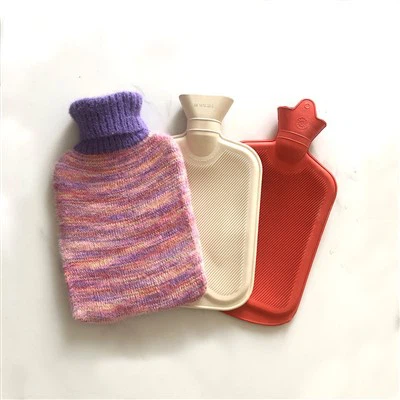
- Silicone Soft Hot Water Bottle: This product features a soft and flexible silicone design, making it easy to mold around your body. The heat - conduction property is optimized to provide a comfortable and long - lasting warmth.
- Silicone Heated Hot Water Bottle: This innovative hot water bottle comes with additional heating elements, which can maintain the water temperature at a desired level for an extended period. The silicone material ensures safety during the heating process, and the heat is evenly distributed.
- Large Capacity Silicone Hot Water Bag: If you need more heat, this large - capacity option is perfect for you. It can hold a significant amount of hot water, providing long - term warmth. The heat - conduction property is carefully engineered to ensure that the heat is effectively transferred to the outside while still maintaining good heat retention.
Conclusion
In conclusion, the heat - conduction property of silicone hot water bottles is a result of the unique thermal characteristics of silicone. The relatively low thermal conductivity offers both safety and long - lasting warmth, making them a popular choice in the market. Our company, as a professional supplier of silicone hot water bottles, is committed to providing high - quality products with excellent heat - conduction performance.


If you are interested in our silicone hot water bottles or have any questions regarding their heat - conduction properties, please feel free to contact us for procurement discussions. We are looking forward to establishing a long - term business relationship with you.
References
- Incropera, F. P., & DeWitt, D. P. (2001). Fundamentals of Heat and Mass Transfer. John Wiley & Sons.
- Holman, J. P. (2002). Heat Transfer. McGraw - Hill.